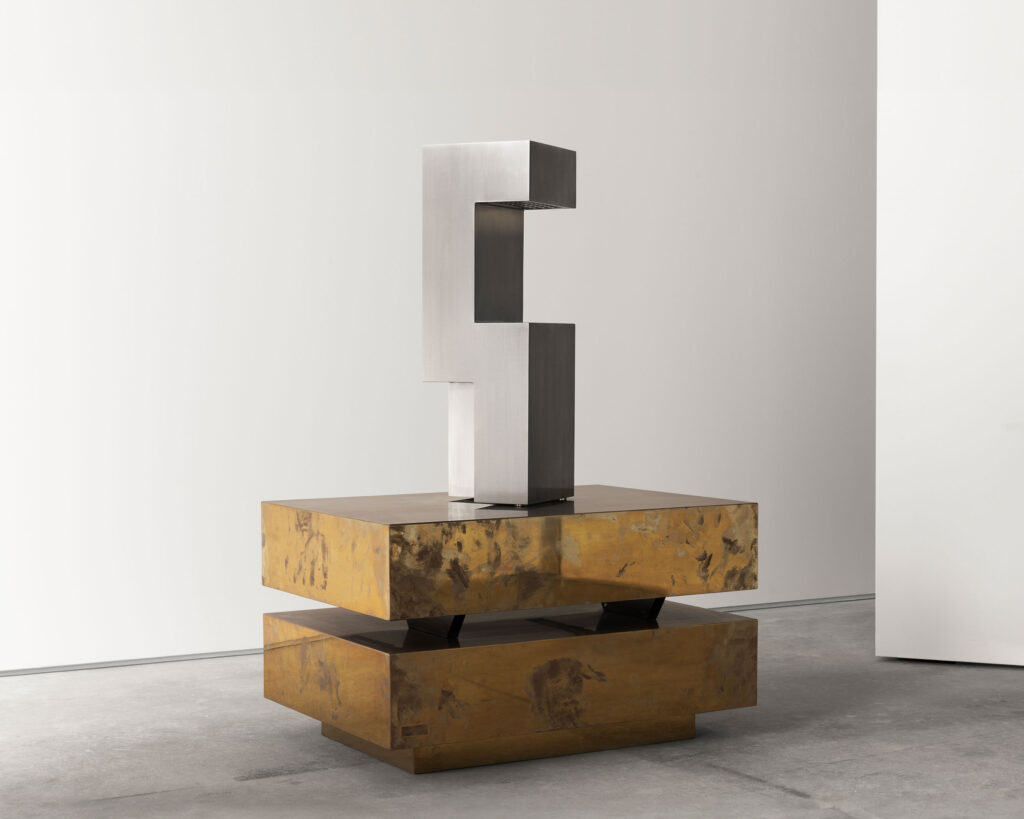
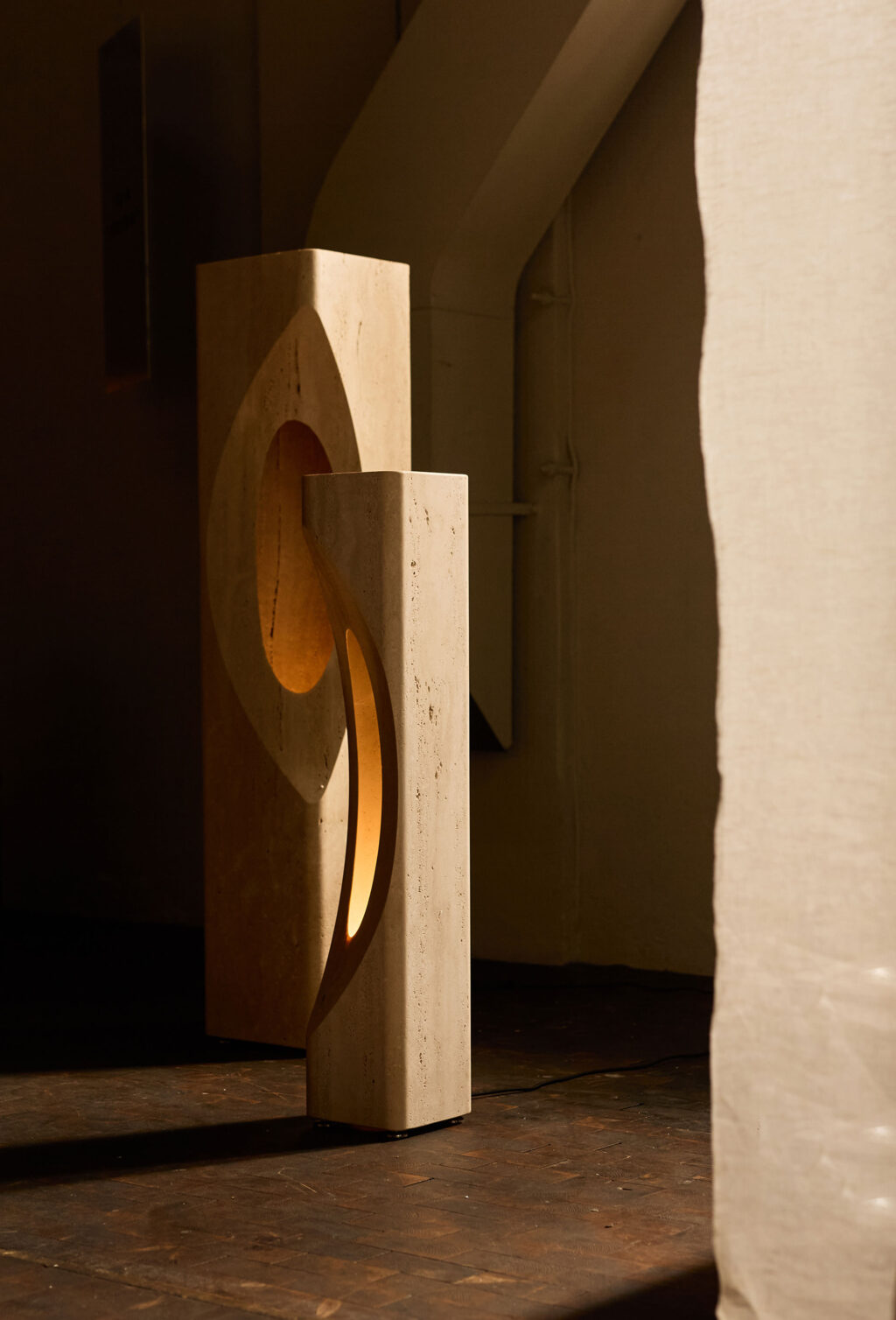
One Artist, Full Focus: Ten Unmissable Solo Shows Coming to Melbourne Art Fair 2026

With three weeks to go until Melbourne Art Fair 2026, we turn our attention to a selection of solo presentations set to unfold within the halls of the Melbourne Convention and Exhibition Centre.

This February, more than 150 artists from over 60 galleries and Indigenous art centres will present work at the Fair. Among them, a considered number of galleries have chosen the discipline of the solo booth, foregrounding a single practice and allowing space for ideas to unfold with clarity and intent. These presentations offer concentrated insight into the ideas, materials and methods shaping contemporary art today.

Here, we highlight ten solo shows not to be missed at the Fair next month.

James Little
Nasha Gallery (Gadigal Country/Sydney), Booth G4

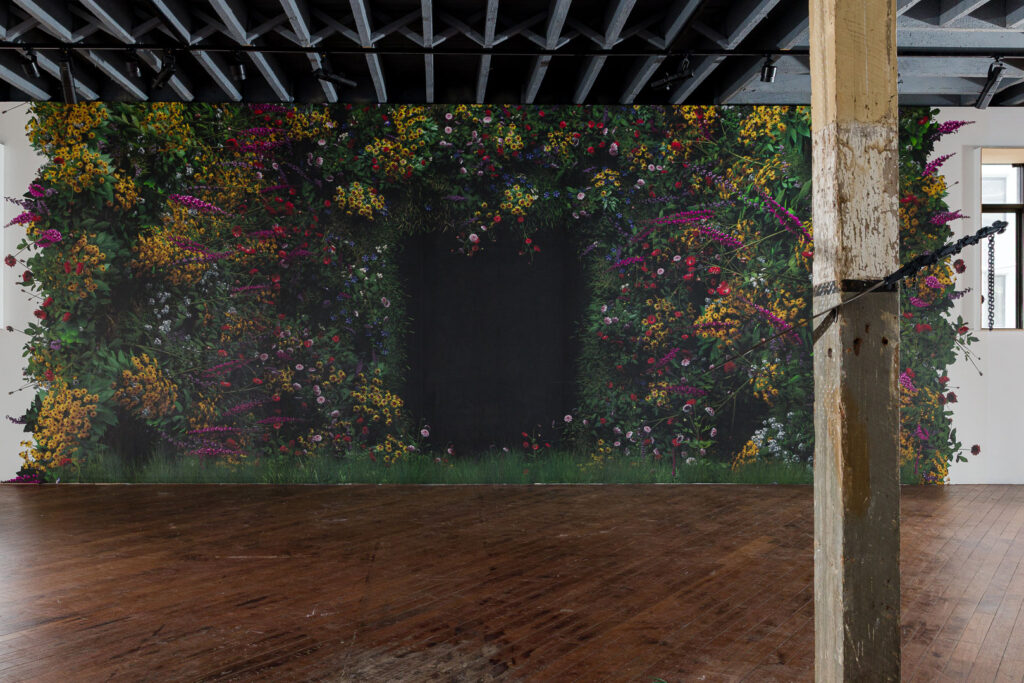
James Little’s last exhibition at Nasha Gallery, DRINK BLEACH comprised a suite of new works – embedded and wall-mounted sculptures, framed pictures, wall-mounted steel sculptures and a single large wall print. The installation beckoned the viewer toward a fragmented narrative that traces the symptoms of moral fantasies within masculinity. The work considers what fulfills a narrative of fact, and what fulfills a narrative of fantasy, and how each affects masculinity’s self-interpretation of what it is to be masculine. At Melbourne Art Fair, James continues this investigation, exploring how the internet and pop culture inform young men’s understanding of being masculine.

James Little, DRINK BLEACH, installation view, 2025. Photo: Sarah Kukathas. Courtesy Nasha Gallery.

Julie Fragar
The Renshaws’ (Meanjin/Brisbane), Booth J3

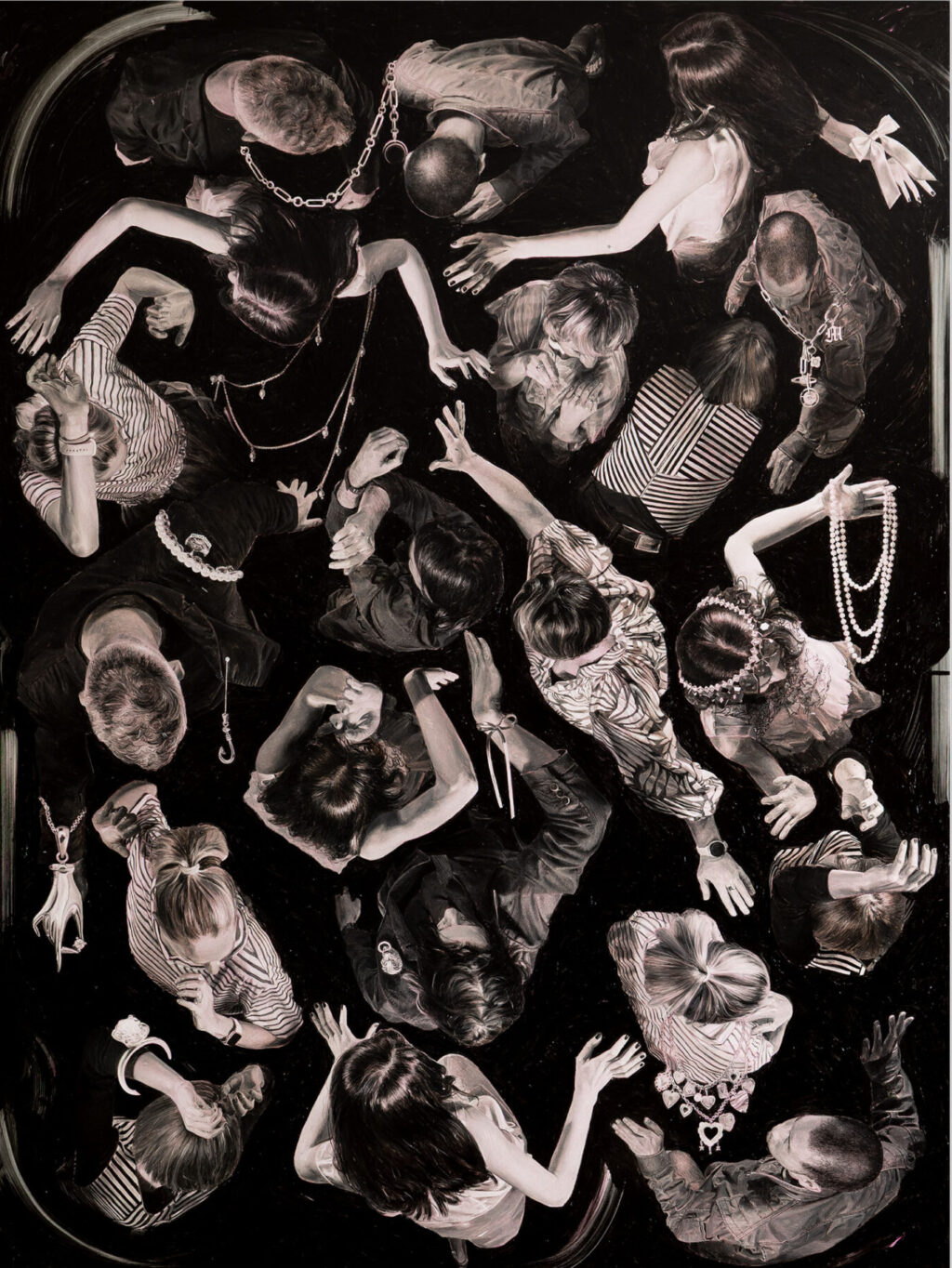
The Renshaws’ presents One & The Many, a new series by Julie Fragar.

Contemporary social life asks us to recognise others as individuals with distinct needs and inner lives, whilst simultaneously navigating the demands of larger groups that carry their own histories, expectations and pressures. No matter how empathetic or connected we might feel, we operate from within our own bodies, bound to a singular point of perception/vantage point from which all understanding begins. We become aware of their own position in relation to these images and to Fragar’s subjects, neither fully inside the group nor safely outside it, but hovering somewhere in between.

Consumed as a body of work, One & The Many registers a familiar paradox. Each of us stands at the centre of our own lived universe, even as we move within a larger choreography that we are constantly navigating, shaping, and being shaped by. In this way, Fragar’s paintings do not so much resolve the tension between the collective and the self as they sustain it. Her images remain open and unsettled, alive to our own vantage point and to the shifting, often uncomfortable realities of being with others.

Julie Fragar, Feedback, 2026, Oil on canvas, 1800h x 1350w mm. Courtesy the artist and The Renshaws’.


Rive Roshan
Gallery Sally Dan-Cuthbert (Gadigal Country/Sydney), Booth I1

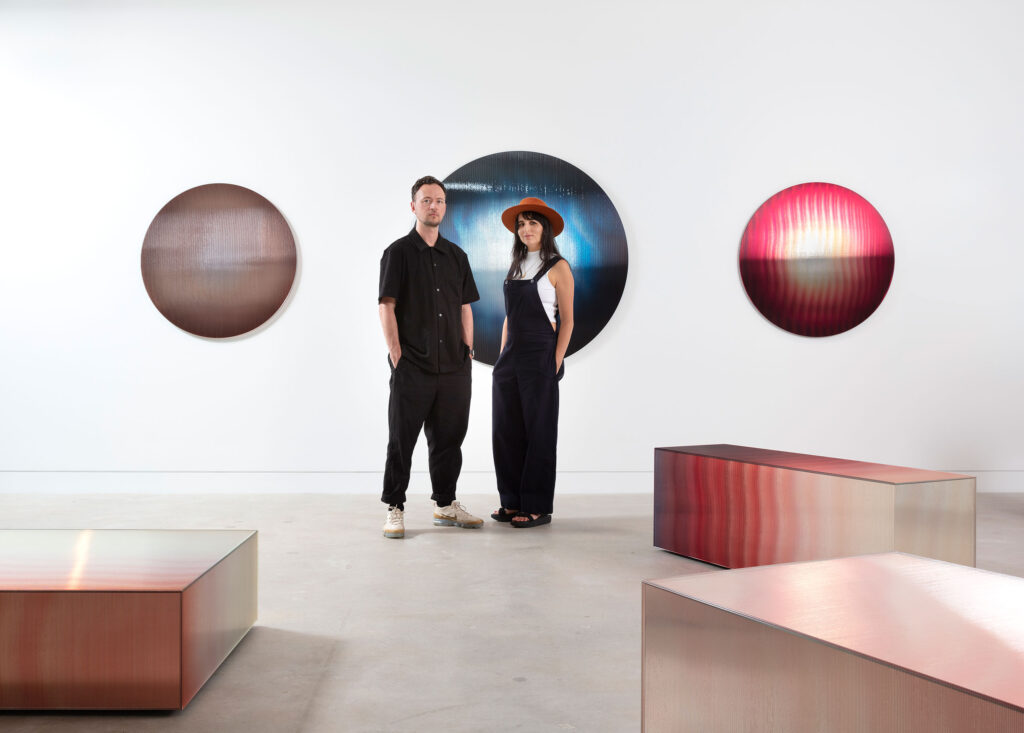
Gallery Sally Dan-Cuthbert presents The Sky We Share, an immersive solo installation by Amsterdam-based artist duo Rive Roshan. The presentation will debut 10 new works that expand on the acclaimed artists’ ongoing exploration of “ordinary miracles” — the unexpected, extraordinary moments that exist in the day-to-day — alongside a selection of carefully curated earlier works.

Over the past decade, Rive Roshan has garnered an international following thanks to works that combine ethereal aesthetics, poetic narratives, and technical innovation. Their pieces play with form, colour, light, and reflection to mimic and abstract their environments, with the intention of evoking a sense of curiosity and or wonder in onlookers. Within The Sky We Share, the pair debut a new series of intricate glass works titled Windows, inspired by moments they observed and photographed from their Amsterdam home and studio when water met sky — the water distorting the colour and movement of the light and then reinterpreted as glass marquetry panels. Each piece records a specific moment and location, time-stamped in its title, yet continues to transform with the changing light and perspective of its new context. The works are composed using a new, unique glass marquetry technique that combines varying glass types and textures into a single work.

Rive Roshan Artist Portrait. Golnar Roshan and Ruben de la Rive Box, solo Exhibition 2024, Gallery Sally Dan-Cuthbert. Photo: Simon Hewson Fatografi. Image courtesy the artists and Gallery Sally Dan-Cuthbert.

Ruth O’Leary
Mary Cherry Contemporary (Naarm/Melbourne), Booth C5

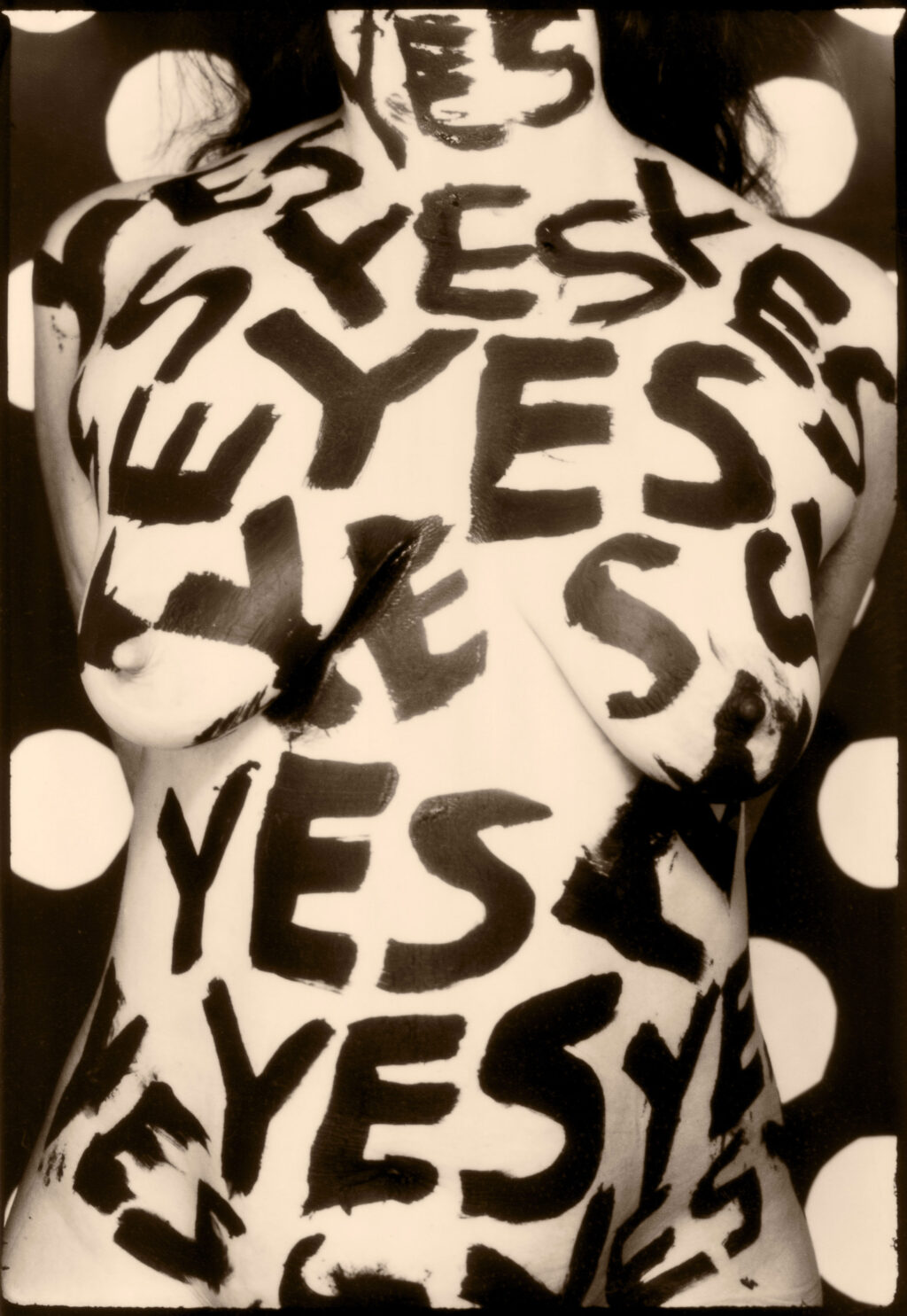
Extending her solo exhibition Hidden Mothers at Mary Cherry Contemporary, Ruth O’Leary presents new work that shifts focus from the maternal body to the politics of looking. Using an analogue photo booth as stage, O’Leary creates portraits where her face — obscured by painted textiles and costumes — becomes deliberately unrecognisable. Where Hidden Mothers centred the torso as site of maternal labor, these photographs interrogate the role of woman as muse within art history, using the body as mannequin to try on different ideas about visibility, desire, and power. 

The work explores the gaze from all positions: subject, object, and viewer. O’Leary asks what becomes challenging to look at, and why. In transforming herself into anonymous figures, she refuses the traditional dynamic of woman-as-muse while simultaneously examining the seductive pull of that very position. 

Alongside the photographs, O’Leary presents a new series of Fuck Paintings, text-based works that continue her practice of using language to provoke and interrogate. These paintings embody the tension between refusal and acceptance, addressing the complexity of inhabiting identities that art history has traditionally constrained. 

Image courtesy the artist and Mary Cherry Contemporary.

Lesley Dumbrell
Charles Nodrum Gallery (Naarm/Melbourne), Booth A4

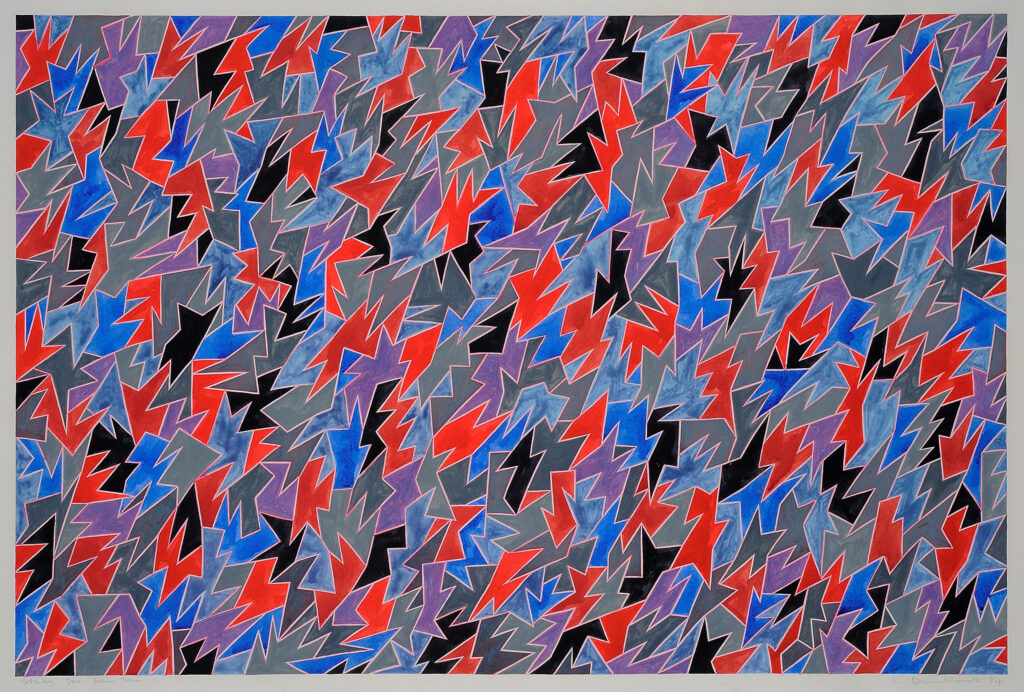
Charles Nodrum Gallery presents Paintings and Drawings 1960s – 2010s from the legendary Lesley Dumbrell.

Dumbrell has been refining her geometric abstract painting technique for over forty years, and today she is regarded as one of Australia’s most respected artists in the field – as her recent Art Gallery of New South Wales retrospective, titled THRUM (20 Jul-13 Oct 2024), and the critical responses it attracted demonstrate. She came to prominence in the 1970s with her large-scale optical paintings and through her involvement in the women’s art movement, including as a founding member of the Women’s Art Register (WAR) and participating in the influential collective who founded and published the interdisciplinary magazine Lip, A Feminist Arts Journal (1976-1984) – the first of its kind in Australia. In 1990 Dumbrell moved to Thailand, and has since maintained two home studios, one in Bangkok and one in Euroa in central Victoria.

Dumbrell’s richly-coloured, intensely-lined paintings are essays in colour, geometry and optical perception, as well as being an evocation of her surroundings; whether it be the tropical flora and bustling streets of Bangkok or the rolling hills and vast skies of the Strathbogie Ranges, the work is about environment and atmosphere.

Lesley Dumbrell, Study for Fan Tan I, 1984, watercolour on paper, 66.5 x 103cm, signed, titled and dated below image in pencil, exhibited: Colour and Transparency: The Watercolours of Lesley Dumbrell, Robert Jacks and Victor Majzner, National Gallery of Victoria, 22 February – 27 April, 1986, no. 11 (label verso). Photo: Gavin Hansford. Courtesy the artist and Charles Nodrum Gallery.

Elizabeth Newman
Neon Parc (Naarm/Melbourne), Booth J2

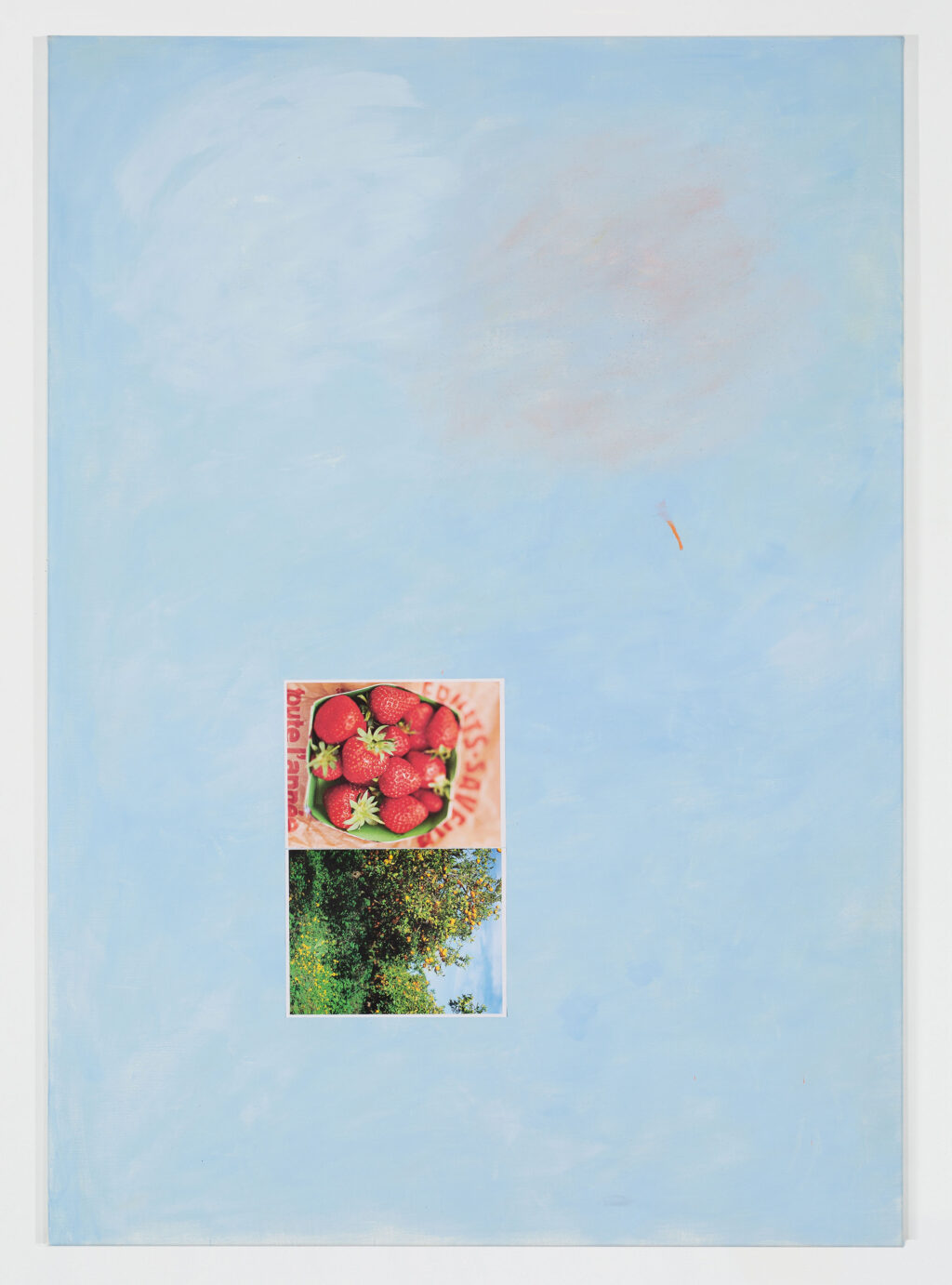
Neon Parc’s presentation brings together a focused selection of key recent and historical works that trace significant trajectories within Newman’s practice, spanning the years of her career. The show includes several works that have not previously been exhibited, offering new points of entry into the artist’s sustained formal and conceptual concerns.

This solo exhibition follows Neon Parc’s last exhibition of 2025, and celebration of Newman’s influence and friendships, I 🖤 Lizzy.

Elizabeth Newman exhibited art throughout Australia and overseas since the 1980s. A painter by training, she expanded her practice over the years to include wall works, objects, text-based works and writing. Her innovative and experimental work has been of significant influence upon her contemporaries and, further, on younger generations of artists who regard her practice as exemplary.

Elizabeth Newman, Untitled, 2022, Oil and collage on linen, 135 x 95 cm. Courtesy Neon Parc.

Rana Begum
Galerie Christian Lethert (Cologne, Germany), Booth C1

“Begum’s work rarely rests on overtly personal narratives, and its formally restrained aesthetic might appear reminiscent, at first glance, of Western art movements such as Op-Art, Minimalism and Hard-edge painting. Nonetheless, her output is profoundly and palpably informed by her upbringing between Bangladesh and the UK – chided by her mother for spending too long sitting outside, staring into space, watching for changes in the light.”
– Christine Takengny, Senior Curator at the Contemporary Art Society, Cologne.

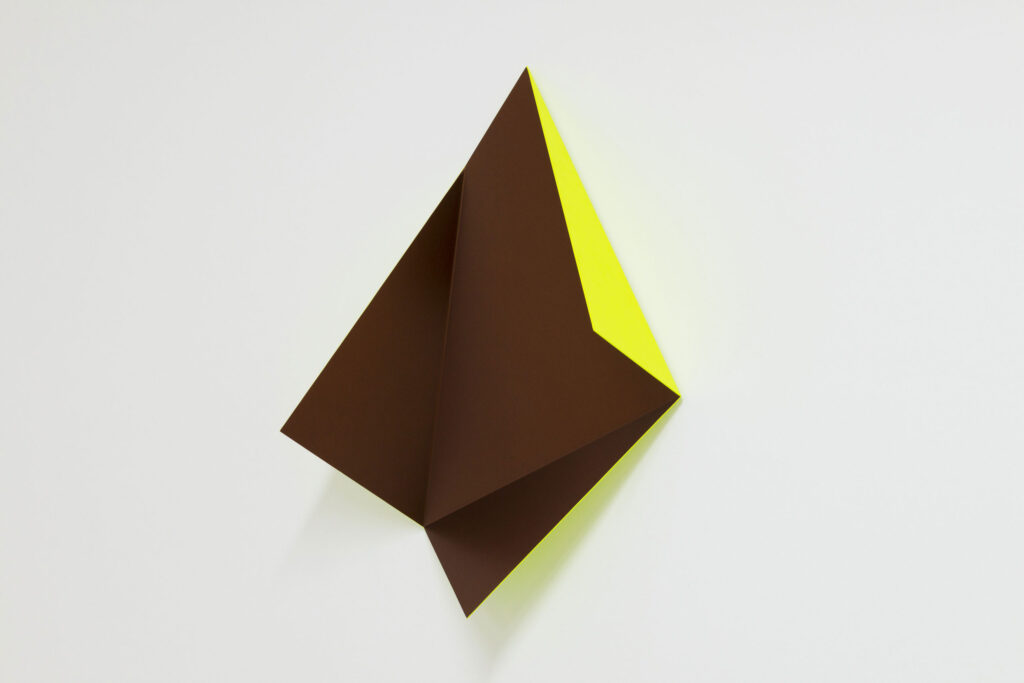
Galerie Christian Lethert makes their debut at Melbourne Art Fair with a selection of works by London-based artist Rana Begum. Her practice constitutes an ongoing exploration of color, light, and form, and the dynamic relationships between them. The presentation features an installation that dissolves the boundaries between painting, sculpture, and architecture through the transformation of an everyday object: a spray-painted fishing net. This organic, flowing installation is counterbalanced by paintings and relief works that emphasize geometric precision.

Rana Begum, No. 1286 S Fold, 2023, lacquer on mild steel, 72.5 x 53.5 x 19 cm. Photo: Ann Christine Freuwörth. Courtesy the artist and Galerie Christian Lethert.

Arthur (Jalyirri) Dixon
Niagara Galleries (Naarm/Melbourne), Booth H1

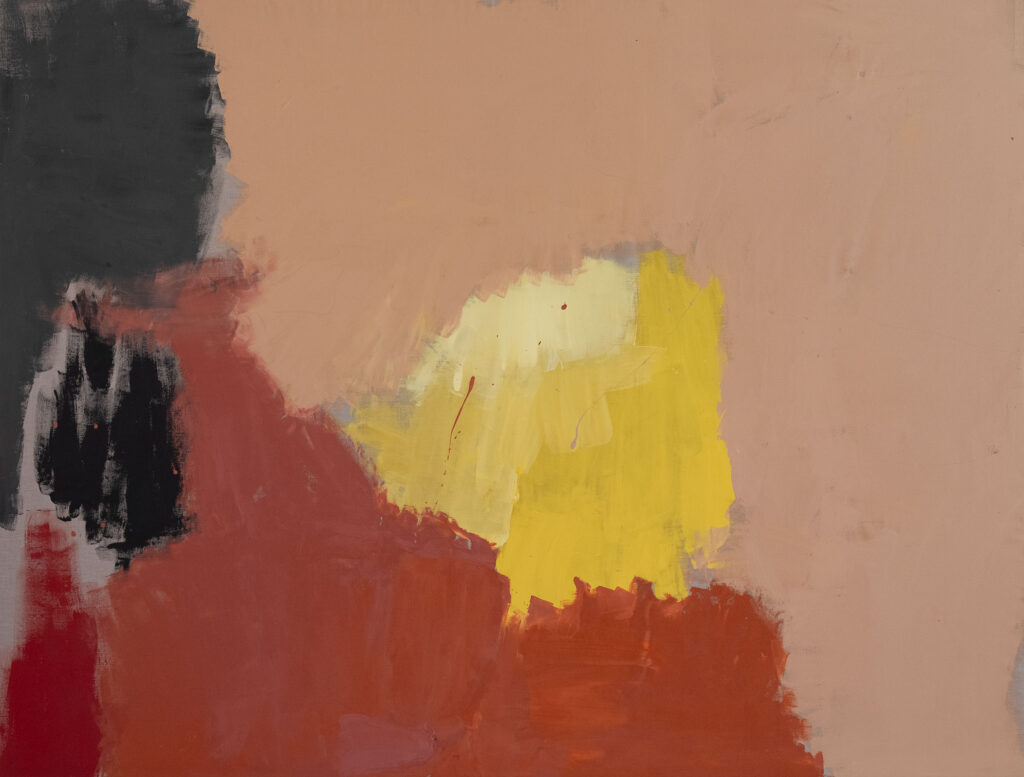
Mudburra artist Arthur (Jalyirri) Dixon (b. 1994) grew up in the remote Northern Territory community of Marlinja, near Elliott, around 700 km from both Alice Springs and Darwin. He grew up in a creative family, using music for storytelling and a vehicle for keeping Mudburra, one of the world’s oldest languages, alive. Both his father Ray Dimakarri Dixon and sister Eleanor Dixon are accomplished singer/songwriters.

Dixon employs gestural mark-making in variously-scaled, evocative abstract paintings. Generally painted off-stretcher, his work features both subtle tonal shifts and contrasting pigments, as well as textural elements from leaving areas of canvas raw. He uses the Mudburra word ngurramarla to describe his work, a term which refers to ancestral connection and the channelling of creativity through this connection. It is a term which reflects the heightened state of Arthur’s expressive act of painting and, in turn, his underlying inspiration to connect with and care for Country. Dixon’s paintings are mostly untitled and highly intuitive rather than literal in their expression of ngurramarla. The first two paintings of Arthur Dixon’s to be publicly exhibited, as part of the 2023 Desert Mob exhibition in Alice Springs were given the title Ngurramarlawas, an indication of the artist’s emerging status and remarkable freedom and confidence as a painter.

Arthur (Jalyirri) Dixon, Untitled (AD24018), 2024, acrylic on canvas, 195.5 x 256.5cm (24623). Courtesy the artist and Niagara Galleries.


Don Cameron (Gadigal Country/Sydney)
FUTUREOBJEKT, Booth E13

At Melbourne Art Fair’s inaugural collectible design salon, Don Cameron will showcase a considered mix of rare vintage collectible design pieces together with new works of his own including a series of lamps and nesting seating concepts.

Graduating with 1st Class Honours from Central St Martins, Don Cameron’s career began as a director of music videos—creating era-defining works for British recording artists Pet Shop Boys, Garbage and Blur. Cameron’s videos engaged architecture, objects and furniture to compose compelling visual narratives.

In 2008 Cameron began to explore the disciplines of design and interior architecture. His auteur approach to film crossed mediums to find concrete form in the built environment. Arriving at a unique language that approached the comprehensive design of interiors with a film vocabulary—endowing spaces with a strong visceral, emotional and scenographic quality. Cameron’s interiors involve everything from the concept and arrangement of the space to the design of custom furniture and fittings—directing artisans and specialist workshops to realise his original vision.

In 2020, Cameron presented Communion with Gallery Sally Dan–Cuthbert which comprised a photomedia series depicting concrete architecture designed for protection, memory and salvation, researched and encountered over a twenty year period. In 2022, his exhibition titled Translations saw Cameron translate these atmospheres from the photographic to the functional, creating a range of furnishings that take inspiration from the forms and atmospheres of the works he lensed.

Don Cameron, Bloc Lamp 02, from Translations, 2022. Courtesy Don Cameron.

Tom Fereday (Gadigal Country/Sydney)
FUTUREOBJEKT, Booth E2

Fascinated by the tension that lies between natural materials and contemporary design and manufacture, Tom Fereday develops unique designs originating from an intrinsic inquiry into the role of objects today. Built on the principle of honest design, Tom Fereday’s work celebrates the materials and manufacture behind furniture and objects, guiding considered and thoughtful design outcomes that explore the notion of quiet innovation.

As part of FUTUREOBJEKT, Tom Fereday will present a cluster of sculptural stone plinth lights alongside his ‘Cast’ speaker, clad in marine-grade aluminium and designed in collaboration with Tasmanian audio design duo Pitt & Giblin.

Tom Fereday, installation view. Photo: Fritz Buziek. Courtesy Tom Fereday.