READ | Fiona Hall on Honey Bee Cooperation, Using Repurposed Materials and Barbarians at the Gate

Fiona Hall is an established Australian artist who works across a variety of media, often employing forms of museological display in her work. Major surveys of Hall’s work have been held by public institutions across Australia and New Zealand, and she has exhibited extensively internationally. Hall represented Australia at the 2015 Venice Biennale with her installation Wrong Way Time.

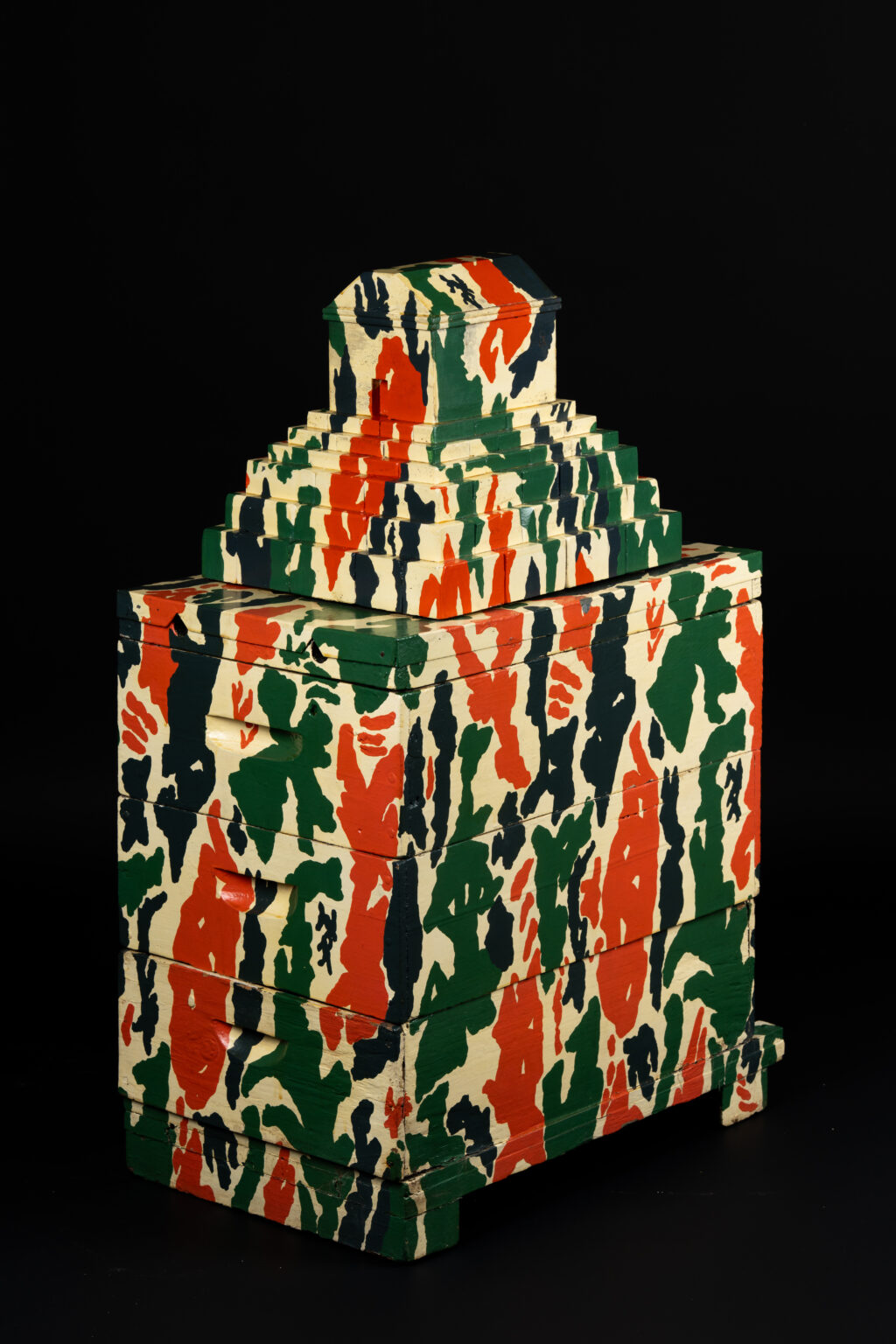
Fiona Hall’s major series, Barbarians at the Gate (2010) arrives as part of Melbourne Art Fair’s BEYOND sector through a smaller curation of works that explore the political interface between nature and culture, and the  complex relationships between ecology and economy.

This work questions humanity’s impact on the planet and contemplate the precarious future of its species.

Fair Director Melissa Loughnan and the artist caught up to chat about her BEYOND presentation at Melbourne Art Fair. Fiona is represented by Roslyn Oxley9 Gallery (Gadigal Country/Sydney). 

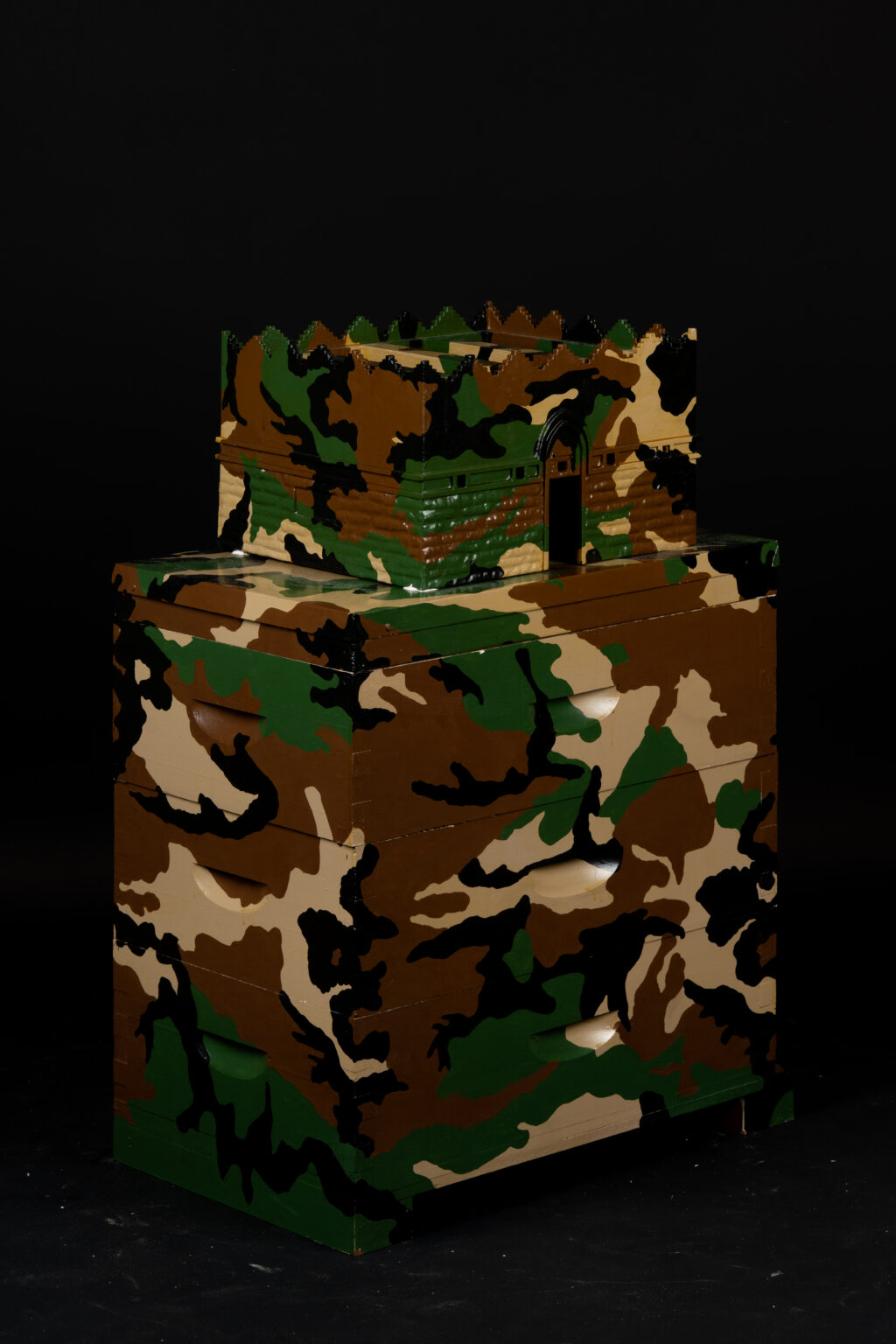
Barbarians at the Gate, an installation of beehives painted in the camouflage of various nations’ military, was first conceived for the Biennale of Sydney in 2010 and housed in Sydney’s botanical gardens. How do you think the series will translate in an art fair context?

I suspect the installation will work equally well in an interior location. Conceived of in 2010, it was a response to the 2nd Gulf War in Iraq, a prolonged conflict which drew in several nations, including Australia. Sadly, more than fifteen years later the region remains a hugely conflicted and contested place. It’s very hard to envision any resolution or lasting peace.

Fiona Hall, Barbarians At The Gate, 2010. Photo by David Suyasa. Courtesy of the artist and Roslyn Oxley9 Gallery.

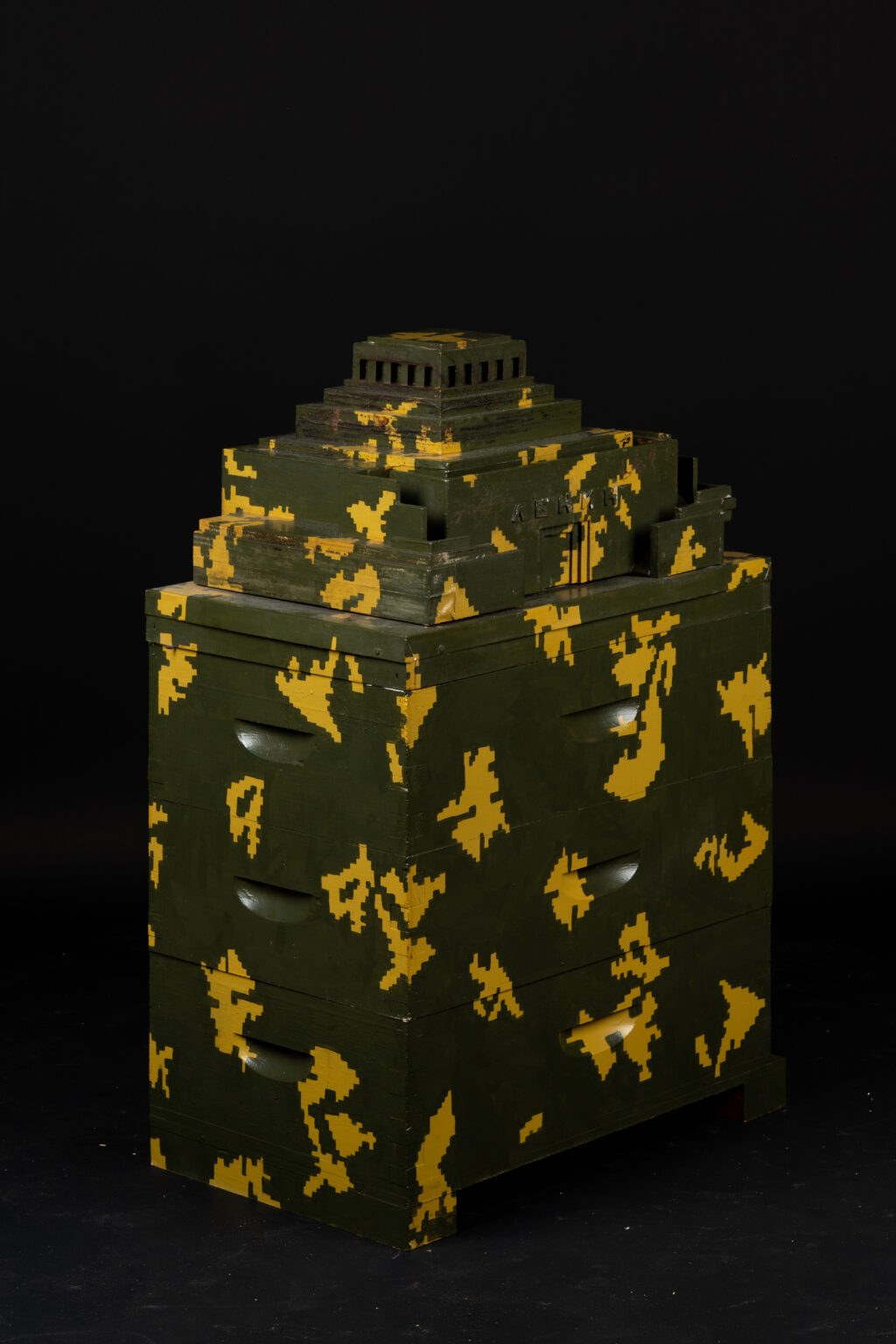
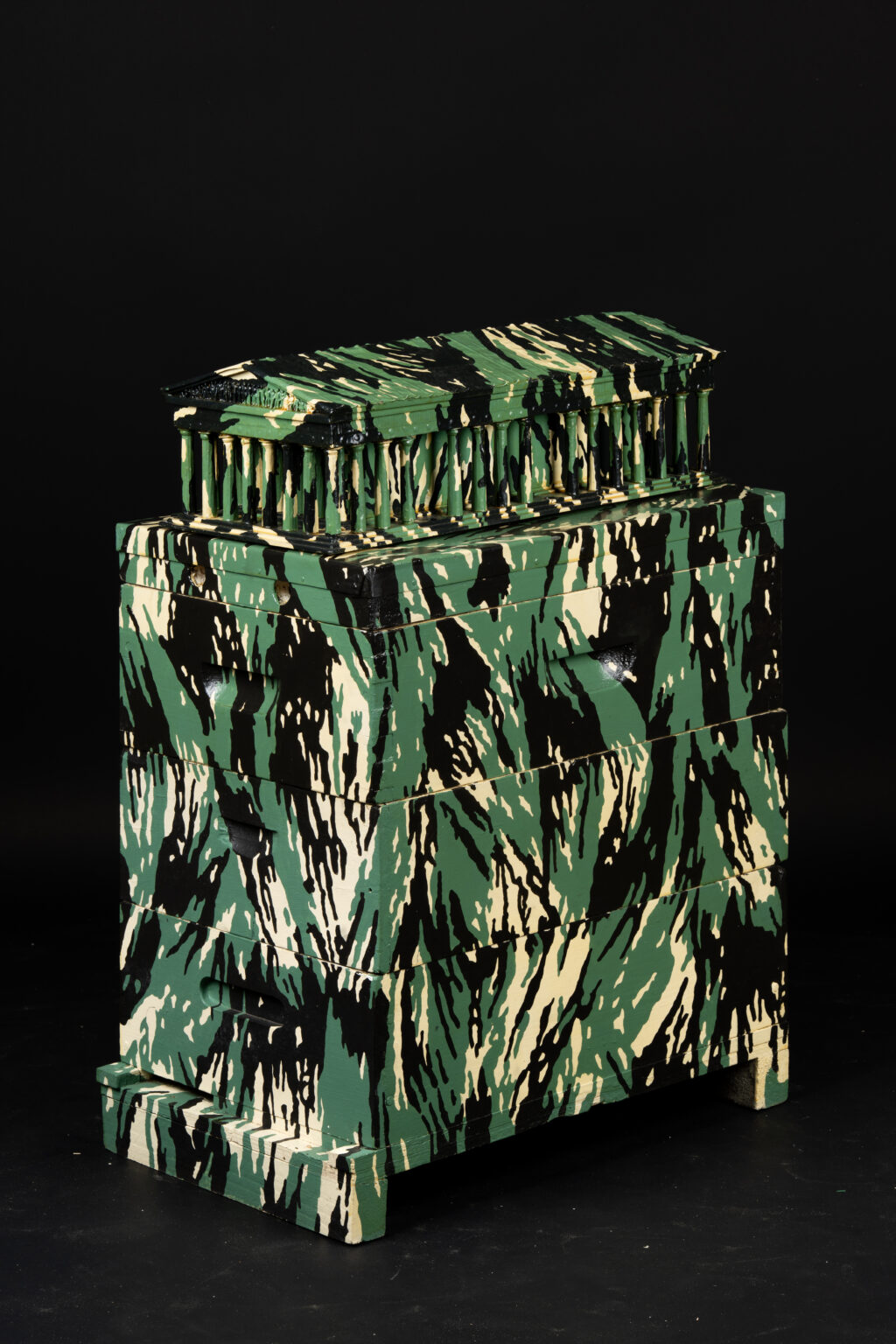
Symbols of imperial power adorn the tops of these beehives – the Brandenburg Gate, the Arc de Triomphe, Westminster, the Pentagon, the Parthenon, the Pantheon, etc. – which once housed the threatened native Sugarbag bee species. What are you commenting on through this juxtaposition?

The work comprises beehives, painted in the military camouflage patterns of nations who participated in the conflict; the hives are also plinths for architectural structures emblematic of each country. The use of beehives is an important conceptual  element of the installation. Honey bee colonies have long been regarded as exemplars of harmony and social cohesion; their ability to act  cooperatively (which is a genetically programmed survival strategy) Is seemingly unattainable for us.

Fiona Hall, Barbarians At The Gate, 2010. Photo by David Suyasa. Courtesy of the artist and Roslyn Oxley9 Gallery.

Can you expand on the physical process of creating these works? How does your engagement with organic materials shape the conceptual and sensory experience of your installations?

Quite often my work utilises repurposed materials, which become an integral part of the work’s conceptual intent. We live in a world full of stuff: the connections I attempt to make between an idea and its materiality somehow arise from a perceived schism between our material and natural worlds and a growing sense of political and environmental foreboding. 

Fiona Hall, Barbarians At The Gate, 2010. Photo by David Suyasa. Courtesy of the artist and Roslyn Oxley9 Gallery.
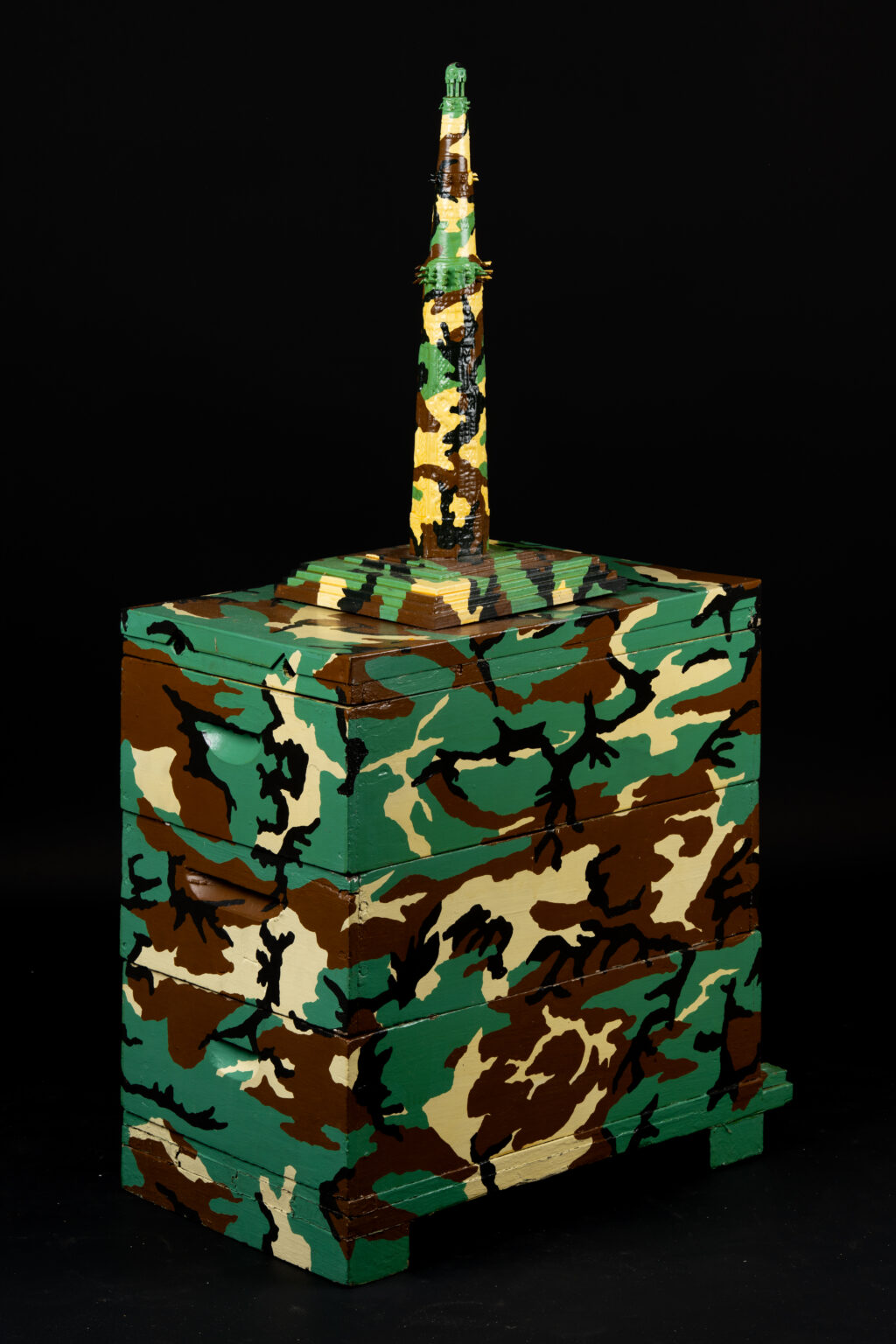
Thinking about your practice more broadly: can you elaborate on the significance of museological display methods, such as the emulation of taxidermy and use of vitrines and architectural models, within your practice?

I’ve long been fascinated by the display of museum collections, most particularly the use of cabinets to showcase specimens and artifacts, accumulated fragments from from our fragmented world; each one classified and recontextualised and secure behind glass – and as removed from its previous existence as an insect trapped in amber. Museums are wunderkammers which entice us to explore and consider the wonder and power and ingenuity and mystery of the world beyond, even while we are steadily, relentlessly, eroding and  erasing it.

Fiona Hall, Barbarians At The Gate, 2010. Photo by David Suyasa. Courtesy of the artist and Roslyn Oxley9 Gallery.
The ideas that we’ve been discussing culminate in your 2015 Venice Biennale presentation, Wrong Way Time, which explored three intersecting concerns: global politics, world finances and the environment. How did The Barbarians at the Gate inform this body?

The Barbarians at the Gate has been the forerunner to subsequent works and conceptual directions, and  arose from previous projects. I’ve learned over time that, although I couldn’t say where whatever 
 I’m working on at any given moment might lead – or, if it might not lead anywhere at all – each project with hindsight seems be a kind of signpost to worsk of the future. 
 
Fiona Hall, Barbarians At The Gate, 2010. Photo by David Suyasa. Courtesy of the artist and Roslyn Oxley9 Gallery.
Melbourne Art Fair returns 19 – 22 February 2026. 
Click here to secure tickets.