The Nasha Gallery Boys On Starting a Gallery Together and Communicating Via Hive Mind

Viktor Kravchenko and James Stevens of Nasha Gallery are what we might call two peas in a pod, maybe soulmates, or, as they describe, an ant farm of two. Viktor presses the camera shutter button and James edits the photos.

They work in tandem, each intuitively understanding the other’s tastes while challenging themselves to push further, creatively and even physically. Mostly, they’re driven to platform artists who they feel aren’t being given the opportunities they deserve — upholding work they deem as universally important but too often overlooked. That impulse has become the foundation of the gallery as it exists today. 

Dubbed (at least within the MAF office) the Nasha Boys, we spoke with them about how they met, the kind of art they gravitate towards, and what it means to build a gallery together (almost) from scratch. 

How do you two know each other, and how did the gallery start?

J: We know each other from boarding school. Viktor got sent to boarding school because he was good and I got sent to boarding school because I was bad.

We didn’t really hang out that much. We were friends but not super close. We’d go buy CDs together sometimes. I wish we still did that. I don’t even have a CD player anymore.

Then, we reconnected after high school. Viktor went overseas with his older brother and all his friends and went to wonderful countries and had a really nice time. When he came back, we met at a party in someone’s shed and started chatting.

V: We realised we really liked each other. We got along really well and spent pretty much every day together after that. We liked similar things and both wanted to study art and become artists. Eventually we started working together.

Why did you choose the gallerist path instead of the artist path? Do you still make art?

V: We don’t really make art anymore, not good art. We’re failed artists.

Every time we discussed starting a gallery together, we noticed there were a lot of people making universally important work who weren’t getting shows.

J: At that time there were a lot of really great ARIs in Sydney, but there didn’t seem to be much of a point between an ARI and the more established landscape of galleries. Those galleries weren’t necessarily taking risks on emerging artists, or at least not the ones we thought they should be showing.

Which is understandable. It’s a huge gamble putting on a solo show for someone with no proven record. Big galleries have rent, bills, staff — it doesn’t always make sense.

We were also young when we started. We’ve probably aged rapidly since then. 

V: Gracefully, I would say.

J: It just felt like a really good time for us to start the gallery because there was such a great cohort of artists in Sydney and nationally who weren’t getting opportunities.

What’s the working dynamic between you?

J: If you imagine an ant farm — the cross-section of an ant farm and you can see the ants carrying things over each other, that’s basically us.

Two people, one goal.

V: A hive mind.

Because it’s just the two of us, we’re doing everything at once together.

J: Victor presses the button to take documentation photos, then I edit them. It’s hard to divide labour because we’re both doing everything simultaneously.

We had a staff member for a little while, but it’s difficult. You can’t expect someone to be able to read your mind the way we end up reading each other’s minds.

If you know anyone who can read minds, send them our way.

Will do. Do you argue much or disagree a lot?

V: No. Surprisingly, in our business relationship and friendship, we’re incredibly emotionally mature.

We talk about things if they’re bothering us and don’t let them build up. That’s the privilege of working with your best friend. You can say, “I’m not feeling okay today,” without fear. It’s all completely open with us, and all-consuming at times.

J: We also have very similar tastes. There are obviously things that I like that Viktor doesn’t an vice-versa, but we talk about why and come to an understanding. For the most part, we like the same things, the same artists. So it just works.

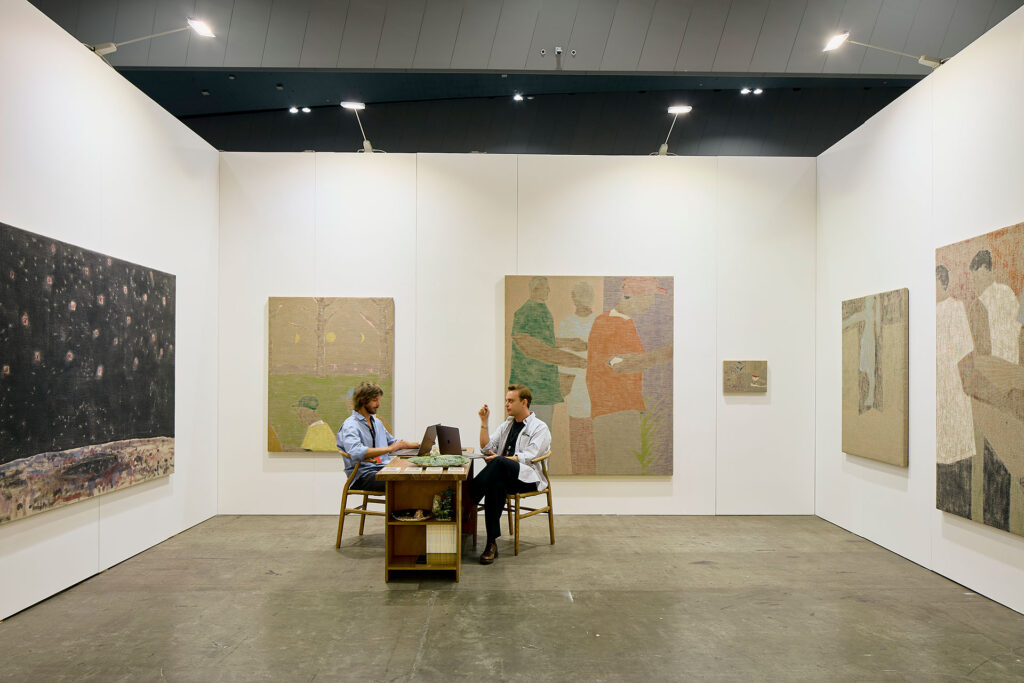
For your Melbourne Art Fair debut in 2024, you showed a incredible solo with Mark Maurangi Carrol’s work. How did you end up working together?

V: We first came across his work online. Then we did non-stop studio visits with him.

After the first visit, we were both so excited. What struck us was how serious he was and how hard he worked.

When we met him, he was seven years out of art school and hadn’t really exhibited anywhere at all. So, there was this incredible archive of work. Seven years of him slogging away in the studio without any of it really being displayed. That was one of the most exciting things to see, especially as a gallerist.

After a few more conversations and studio visits, we realised just how seriously he takes it. It’s been incredibly satisfying working with him from his first show and growing together.

Now he has all this immense success. Between the Adelaide Biennial, the Mosman Art Prize and everything in between – it’s just been really heartwarming.

It’s crazy to think he wasn’t exhibiting for so long.

V: It shows you there are lots of artists like that.

Bigger galleries don’t necessarily want to take the risk because, sometimes even selling out a show doesn’t cover the rent, or the alcohol at the opening.

Generally, the industry path is: you work for someone and when you quit, you take the most successful artists and start your own gallery. But that doesn’t feel nice. It’s not as satisfying.

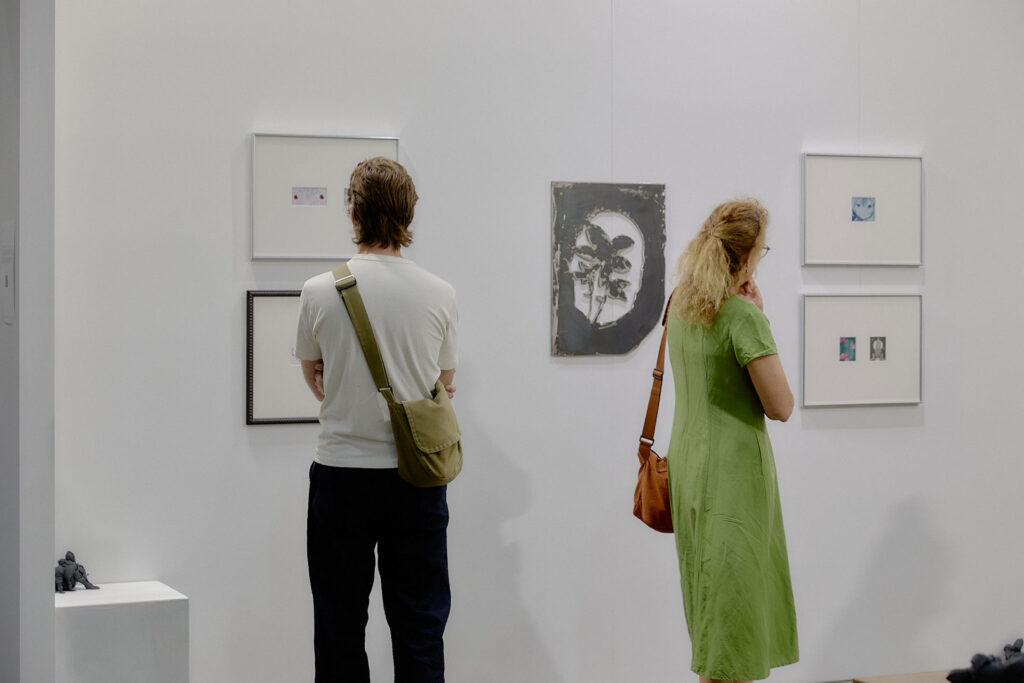
Can you tell us a little bit more about James Little’s solo show at the Fair this year?

J: We’d been looking at James Little’s work for a little while. He had a show with VOID_Melbourne that we really liked. Some of our artists were also encouraging us to look at his work.

When he moved to Sydney to do his MFA at the National Art School, he introduced himself to us. We started doing studio visits, talking, planning. We eventually presented his solo exhibition, DRINK BLEACH, at the gallery in 2025.

V: He has an incredibly diverse practice. A lot of our artists do and we find that very exciting. He uses material subversion in really interesting ways. He references fantasy, hobby culture — things we’re particularly interested in — but through the lens of gender and masculinity, and exploring what masculinity means today. Those are really interesting things to dive into, and also incredibly confusing. It’s nice to exhibit someone working through those ideas in their art.

Tell me about your gallery space. 

V: The space that we’re in now officially opened back in November 2024, with an Oscar Nimmo exhibition.

We knew we wanted to be in Haymarket, in Chinatown. It feels like a big city. Things are happening late at night, there’s a sense of energy. Finding the space involved months of walking around, asking people what was upstairs, what might be empty, what might be for lease.

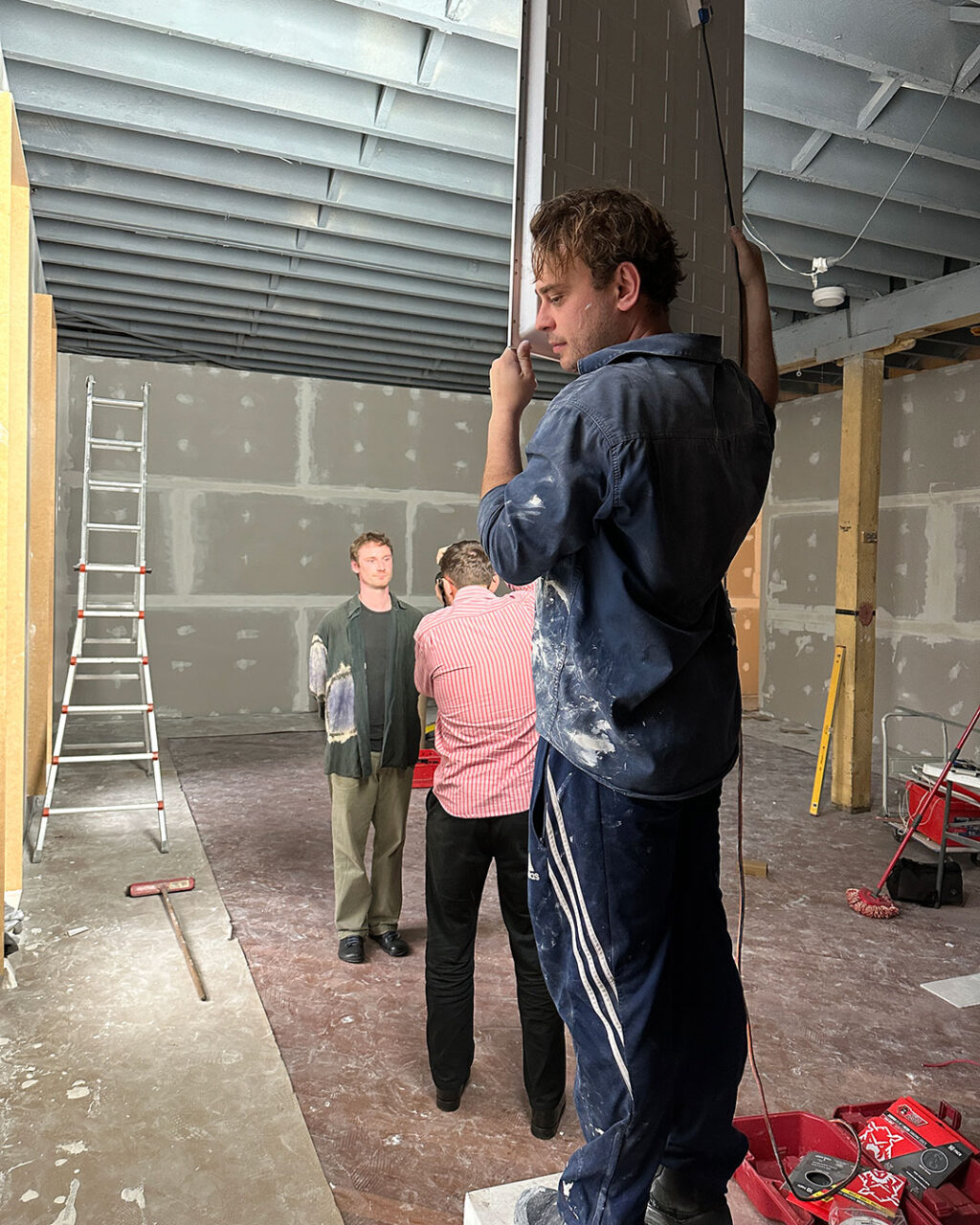
And now the space is beautiful, but it took close to five months of renovations to get here. 

We did it all between us and a friend, Sam Griffith who is an architect — he was instrumental in helping us build this.

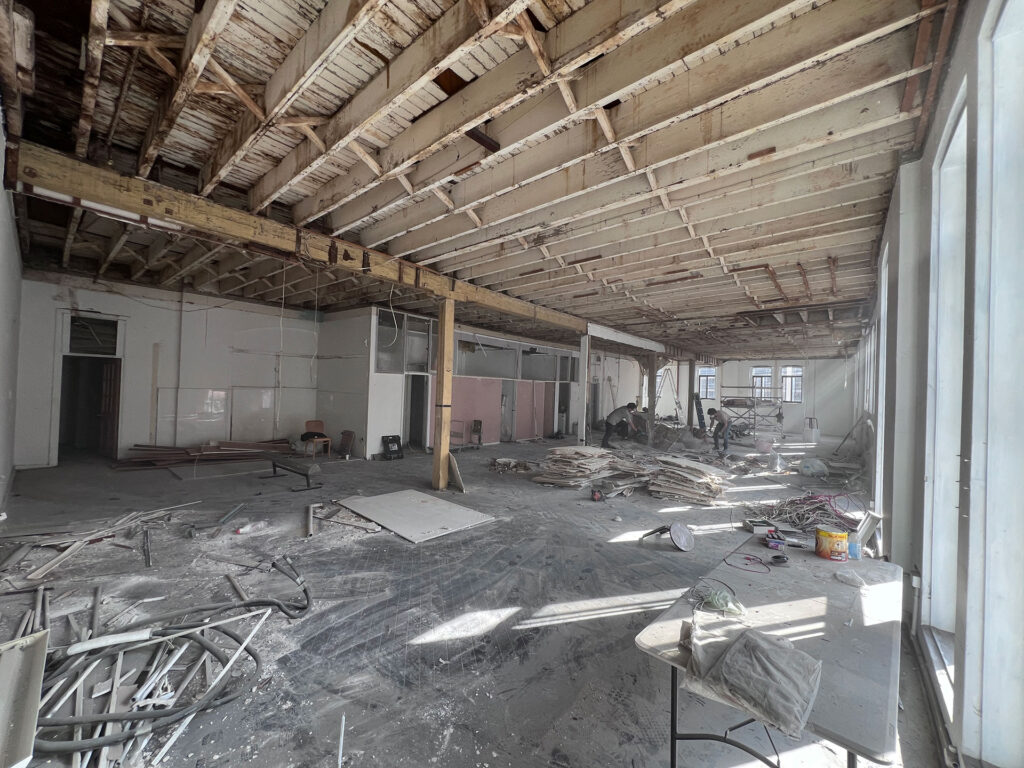
But, like in a lot of things we do, we may have overestimated our abilities. After signing the lease, we had a few drinks in the space to celebrate, and thought the whole thing would take a month or two. Then, just the demolition itself took nearly a month.

J: Everything dragged on and on. But it was great. It was a really fun process. 

We were here day and night. There was more than ten tonnes of material moved up and down the stairs.

V: There was also about a hundred-years worth of dust and mold in the walls and in the ceilings that needed to be removed. 

We’ve touched every single square-metre of this space. Sweated over it and painted it. It’s nice knowing where the good walls are because we built them.

Were there moments when you thought to yourselves “what on Earth have we done?” 

J: Every day. We didn’t ever have a day off. 

We would show people the space sometimes when we weren’t actively constructing, and we would just get absolutely covered in dust. Every nice item of clothing was caked in a layer of really fine dust.

V: We definitely had a few little hiccups with morale.

Sunday nights at 11PM, packing plastic bags full of rubble, thinking: why are we doing this? Does being an art gallery have to be this difficult?

Also the scale — it’s just massive. Over 220 square metres and we weren’t used to it. Everything we had done before was much smaller. This was monumental. It’s an obnoxious-sized gallery to be honest.

J: Luckily, we had help too. A few of our artists came in to help with painting and plastering. We learned to accept help when we needed it.  

Why take on such a large space?

J: Because the work we show deserves it. The artists deserve high walls and proper lighting.

Previously, our exhibitions often happened in basements or whatever spaces we could access. This felt like the right next step. 

V: It felt like building an environment where the work can be taken seriously and where audiences can respond to it the way we do in an artist’s studio.

It was a huge risk. But this gallery has been almost all of our lives — it might as well be wonderful.

Nasha’s next show, Gymamic by Jesse Deng is exhibiting from 27 March – 26 April.